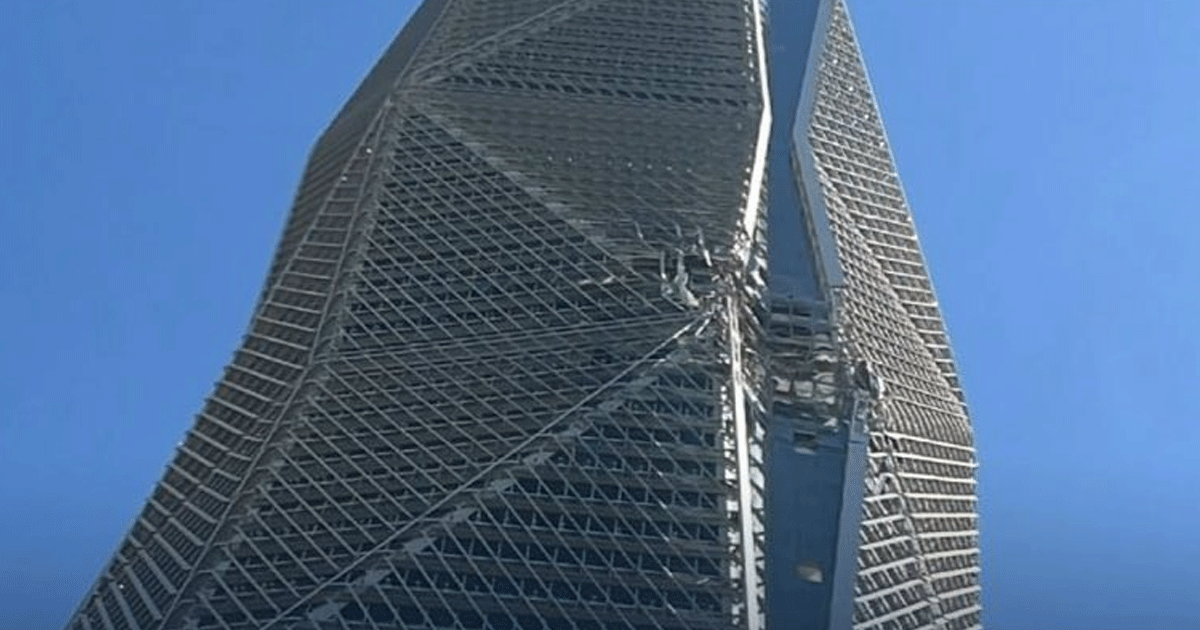
Houthi Missile Strike Damages Riyadh’s Tallest Tower Housing Saudi Wealth Fund

Several floors of landmark PIF Tower hit in suspected missile attack; financial district evacuated as tensions escalate between Saudi Arabia and Yemen’s Houthi rebels
News Desk: Saudi Arabia’s financial heartland came under attack after a suspected Houthi missile strike damaged Riyadh’s tallest skyscraper, the landmark Public Investment Fund (PIF) Tower, which houses the headquarters of the kingdom’s sovereign wealth fund.
The attack on Thursday damaged several floors of the 80-storey building in the King Abdullah Financial District (KAFD), shattering windows and damaging sections of its exterior façade. Nearby buildings also reportedly sustained damage. No casualties or injuries were immediately reported.
Saudi authorities confirmed material damage to a tower in the financial district and surrounding buildings. Emergency services were deployed, while security agencies evacuated people and restricted access to parts of the area as officials assessed the situation.
The incident marks a significant escalation in the security threat to Saudi Arabia’s capital, particularly as the kingdom seeks to establish Riyadh as a major international financial and investment hub.
Riyadh’s tallest skyscraper — home to Saudi Arabia’s $900 billion sovereign wealth fund — damaged in apparent Houthi missile strike
The 80-story Public Investment Fund Tower had shattered windows and bent facade panels across seven to eight floors
No casualties reported https://t.co/ulcFnGBBH4
— RTVisual (@RT_Visual_on_X) November 19, 2026
Financial District Under Security Alert
Following the strike, entrances to the King Abdullah Financial District were closed and people were evacuated from the affected area. Emergency personnel, including ambulances and fire services, were deployed.
Saudi authorities said they had responded to a missile threat directed towards Riyadh. Initial assessments indicated that the attack and falling debris had caused material damage.
The Houthis claimed responsibility for targeting Riyadh’s financial district, announcing that they had launched attacks against multiple Saudi targets. These reportedly included King Khalid International Airport, a military airbase in southern Saudi Arabia and a petrochemical facility in the kingdom’s eastern region. However, these additional claims were not independently confirmed by Saudi authorities.
Saudi Arabia Warns of Retaliation
Saudi Arabia strongly condemned the attack, asserting that targeting civilian and economic infrastructure was unacceptable. The kingdom reiterated its right to take all necessary measures to protect its sovereignty, national security and critical infrastructure.
Riyadh also called upon the international community, particularly permanent members of the UN Security Council, to take responsibility for preventing further attacks and addressing the growing regional security threat.
The latest incident could place additional pressure on Saudi Arabia’s already delicate relationship with the Houthis, raising the possibility of renewed military confrontation.
Second Strike on Riyadh’s Financial Hub
The attack is particularly significant because it follows another reported Houthi strike on a building belonging to Saudi state oil giant Aramco in the same financial district on November 8.
The targeting of two prominent economic establishments within a short period has raised serious concerns over the security of Saudi Arabia’s most important commercial infrastructure.
The King Abdullah Financial District is a flagship development designed to transform Riyadh into a global financial centre. Housing major financial institutions, corporate offices and international businesses, it represents a key component of the kingdom’s economic modernisation programme.
Saudi Arabia’s Vision 2030 Faces Security Challenge
The damaged PIF Tower carries considerable symbolic and economic significance. The Public Investment Fund is the financial engine behind Crown Prince Mohammed bin Salman’s ambitious Vision 2030 programme, which aims to reduce Saudi Arabia’s dependence on oil and develop alternative sources of economic growth.
The fund finances major investments in infrastructure, tourism, technology, entertainment, sports and international businesses. Its headquarters becoming a target highlights the growing vulnerability of Saudi Arabia’s economic assets amid regional instability.
The attack also threatens to undermine investor confidence at a time when the kingdom is attempting to attract foreign capital and establish itself as a preferred destination for global businesses.
Yemen Conflict Threatens Regional Stability
The Houthis, an Iran-aligned armed movement controlling large parts of Yemen, have repeatedly targeted Saudi territory with missiles and drones. Saudi Arabia intervened militarily in Yemen in 2015, leading a coalition supporting the internationally recognised Yemeni government against the rebels.
Although a UN-brokered truce in 2022 substantially reduced cross-border attacks, tensions have persisted. The latest attacks indicate that the threat of renewed hostilities remains far from over.
For Riyadh, the challenge is no longer limited to defending military installations or oil facilities. The targeting of its financial district demonstrates that even the kingdom’s most prominent economic landmarks could become vulnerable in an expanding regional conflict.
The damage to the PIF Tower therefore carries a message beyond the immediate physical destruction: Saudi Arabia’s economic ambitions and its aspirations to become a global investment powerhouse remain closely tied to the security and stability of the wider Middle East.